The Story Behind Culbaba
Culture, memory, and the stories that refuse to disappear.
There are wars fought with weapons, and there are wars fought against memory.
For more than three centuries, the Ukrainian language has been restricted, banned or pushed to the margins by imperial policies. In 1876, the Ems Ukaz prohibited most publications in Ukrainian within the Russian Empire and banned theatrical performances in the language. Ukrainian, spoken by millions, was officially dismissed as a mere dialect.
It was far from the first attempt to suppress Ukrainian culture, and it would not be the last. Ukrainian books were destroyed under imperial rule centuries ago, and today, in Russian-occupied territories, they are once again being removed from libraries and replaced. The methods may change, but the intention remains the same: to weaken a people's connection to their own history, language and identity.
In the 1930s, Stalin's regime arrested and executed an extraordinary generation of Ukrainian writers, poets, artists and intellectuals, remembered today as the Executed Renaissance. Among them were Les Kurbas, one of the pioneers of modern European theatre, and playwright Mykola Kulish, whose work challenged the political and cultural boundaries imposed upon Ukrainian society. Their persecution was part of a much wider campaign against Ukrainian intellectual and cultural life.

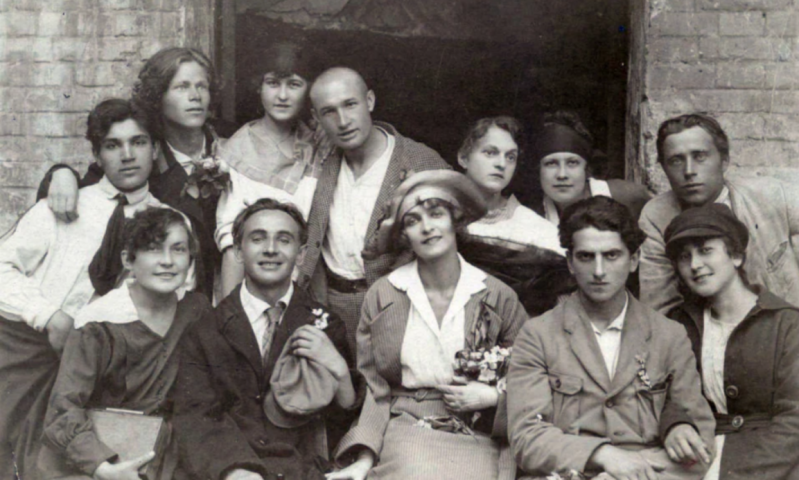
Yet even when a culture is suppressed at home, it can find unexpected ways to survive elsewhere.
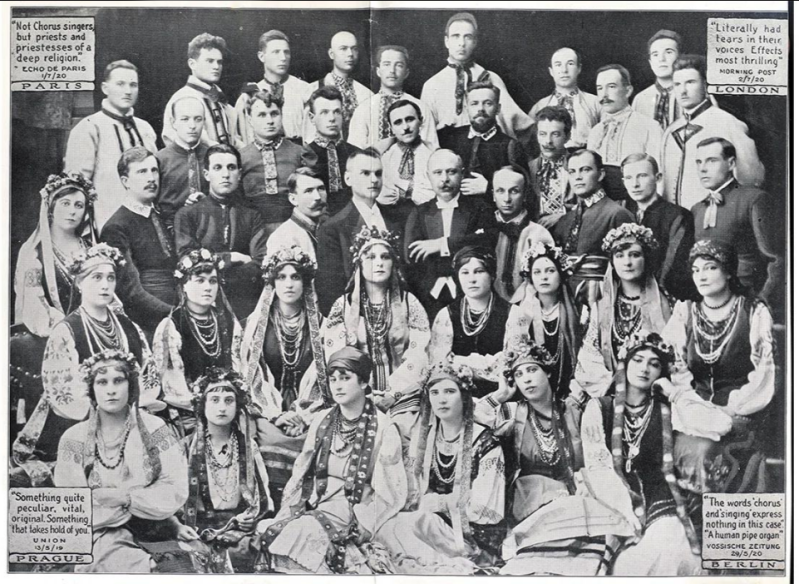
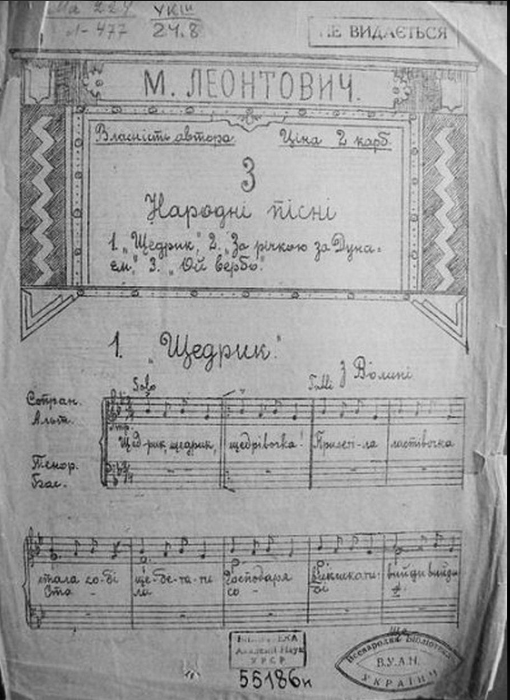
In the early twentieth century, Ukrainian conductor Oleksandr Koshyts led the Ukrainian National Capella on an international tour, introducing audiences across Europe and the Americas to Ukrainian choral music. Among the works they performed was Shchedryk, a traditional Ukrainian song arranged by Mykola Leontovych, whose melody would later become famous around the world as Carol of the Bells. Today, millions recognise the tune, although relatively few know its Ukrainian origins.
What should have been a remarkable chapter in Ukraine's cultural history also became a story of exile. As the Bolshevik regime consolidated power, many members of the choir found themselves unable to return to their homeland. Some spent the rest of their lives abroad, separated from the country whose music they had carried around the world.
More than a century later, Shchedryk continues to travel. In East Sussex, Ukrainian performers have helped introduce its original Ukrainian version into the repertoire of local choirs, with a new accompaniment arranged to make the work accessible to different ensembles. Each Christmas, the familiar melody is heard again, but now with more people discovering the language, history and tradition behind it.
The story of Ukrainian music is full of similar gaps in cultural recognition. Concert halls regularly perform works by Sergei Prokofiev, yet audiences are far less likely to encounter Mykola Lysenko, whose contribution to Ukrainian classical music was fundamental. Mozart is known to almost everyone, while Maksym Berezovsky, a Ukrainian composer who studied at the Bologna Music Academy during the same period, remains unfamiliar even to many musicians. His symphonic work represents an important early chapter in the history of orchestral music in Eastern Europe.
These are not simply questions of fame. They are reminders that the cultural history most people inherit is rarely complete. Some traditions are carefully documented, performed and celebrated, while others survive through the determination of people who refuse to let them disappear.
Sometimes people find themselves a very long way from home.
In Bexhill-on-Sea, a small seaside town in southern England, a group of Ukrainian women has been building something that brings together many of these threads. Their organisation is called Culbaba Theatre CIO.
Culbaba means dandelion in Ukrainian. It is a familiar, unassuming flower, capable of growing in the most unlikely places, while its seeds can be carried far by the wind. For women who have had to rebuild their lives far from home, the symbolism is hard to miss.
Culbaba Theatre grew from the experiences of Ukrainian women who had arrived in East Sussex and were looking for ways to rebuild their lives while maintaining a connection with home. Some had already found one another through community singing, which gradually became a source of friendship, support and creative expression.
In late 2023, Ukrainian musician, conductor and music educator Olena Zdielnikova began developing a broader cultural vision, one that would bring together music, traditional arts, historical research and education. Rather than performing simplified familiar Ukrainian songs, she wanted to explain where they came from, how they had changed over time and what they could tell us about the people who created them.
On 16 March 2024, a new ensemble held its first rehearsal under her artistic direction. The women who came together brought different experiences and abilities, but shared an interest in developing a cultural project that could grow beyond the format of a community choir.
From these beginnings, Culbaba gradually developed its own repertoire, artistic identity and programme of activities. Started with musical rehearsals they have expanded their programme into traditional celebrations, educational workshops, historical projects and collaborations with local cultural organisations.
In its early development, the ensemble also received practical support from The Good Story Initiative CIC, which helped with local connections, an initial set of performance costumes and access to rehearsal facilities at St John's Centre, supported by Bexhill Hub for Ukraine.


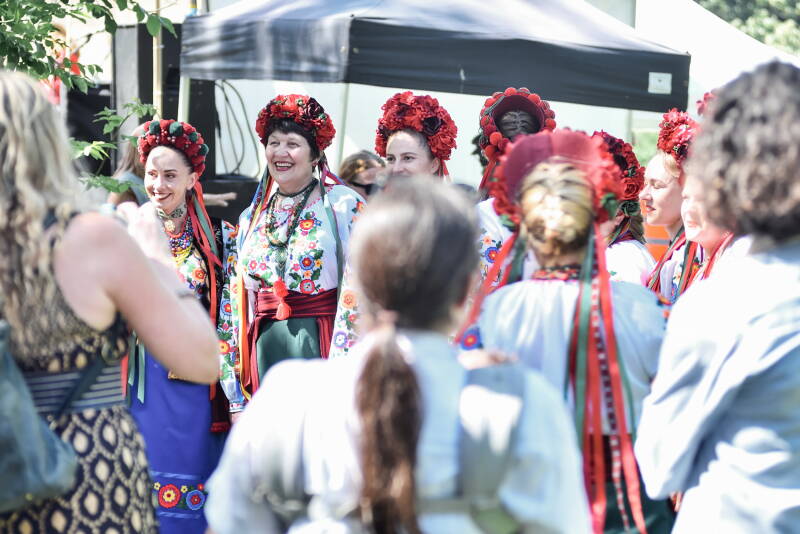

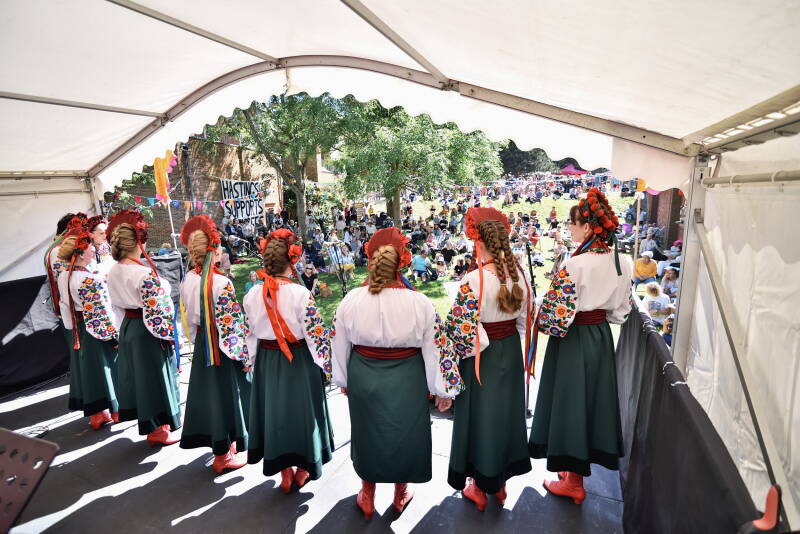
Today, Culbaba Theatre draws on traditional songs, rituals, historical sources and knowledge passed down through generations.
This work has become more urgent since Russia's full-scale invasion of Ukraine in 2022. The war itself began in 2014, with the occupation of Crimea and parts of eastern Ukraine, and has brought enormous losses to Ukraine's cultural heritage. Museums have been looted, archives and historic buildings damaged or destroyed, and cultural institutions have struggled to protect collections built over generations.
For some members of Culbaba, these losses are painfully personal. Their hometowns remain occupied, and some of the places they remember no longer exist as they once did. Yet cultural memory is not confined to buildings or collections, as it survives in a song a father used to sing while braiding his daughter's hair before school, or in the way a grandmother taught her grandchildren to embroider. Such memories may seem small, but together they form an extraordinary inheritance.
Most members of Culbaba Theatre are not professional performers - they are women with jobs, families and responsibilities, many of whom are still navigating the challenges of building a life in another country. Rehearsals, research, performances and community activities have to fit around everything else. Much of the work is voluntary, and members frequently contribute their own time, materials and money to make projects possible.
There is nothing glamorous about carrying costumes on public transport, spending evenings preparing materials or trying to fit another rehearsal into an already busy week. But these ordinary, practical efforts are what allow the larger artistic ideas to become reality.
Over the past few years, Culbaba has become an active participant in the cultural life of East Sussex
Performing at festivals, civic occasions, remembrance events and concerts, while developing its own projects and partnerships. In 2026, the organisation became a registered charity, Culbaba Theatre CIO (Charity No. 1218790), providing a formal foundation for its continuing work.
The ambition never was to recreate an idealised image of Ukraine or present its traditions as something frozen in the past. Ukrainian culture has always been diverse, complex and continually evolving. Culbaba's work is about approaching that heritage with curiosity and respect, understanding its historical context and finding ways for it to remain meaningful today.
For the women involved, this is also a deeply personal undertaking. It is a way of making sure their children know where they come from, of sharing something valuable with the communities that have welcomed them, and of maintaining a connection with places and people that may now be beyond their reach.


Culbaba Theatre is small, so is a dandelion seed, but when carried far enough — it takes root.
And wherever they find suitable ground, they can grow again. A cultural tradition carried across borders, finding new voices and new audiences without losing its connection to the place where it began.
Because culture does not survive through monuments, museums or archives alone. It survives through people who remember, who pass on what they know and who make the effort to keep it alive, because they consider it worthy.
And sometimes, that work begins with a handful of women gathering to sing in a small town far from home.
Socials